By Kerry Lombard, Gaffer - 35years of grip and lighting experience · Updated 11/18/2026
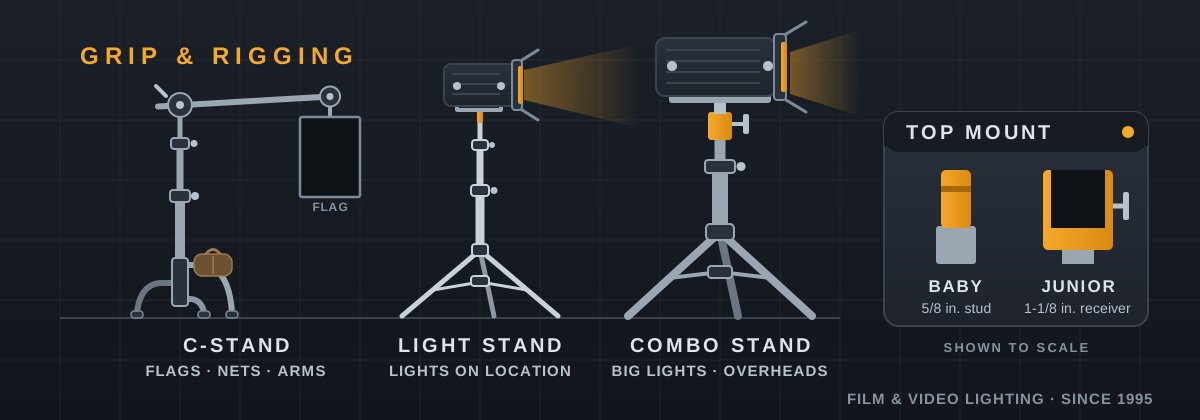
Short answer: A C-stand is a heavy steel stand with low, staggered legs and a grip arm, built to hold flags, nets and small lights out over the set. A light stand is a lighter (usually aluminum) tripod stand built to hold a light straight up. A combo stand is a tall, heavy-duty steel stand with a 1-1/8 in. junior receiver for larger lights. Most crews own all three.
| C-stand | Light stand | Combo stand | |
|---|---|---|---|
| Built from | Steel | Usually aluminum | Steel |
| Legs | Low and staggered; stands nest together | Tall tripod legs spread wide | Heavy-duty base |
| Top mount | 5/8 in. stud (baby pin), plus grip head and arm | 5/8 in. stud (baby pin) | 1-1/8 in. junior receiver, often with a baby pin adapter |
| Weight it holds | Moderate; Matthews rates its 40 in. C-stand at 22 lb | Light to moderate; varies widely | Heavy; check each model |
| Best for | Flags, nets, bounce, small lights, booming things over the set | Lights on location, when weight and packing size matter | Large fixtures, overheads and big modifiers |
Load ratings vary by brand and model, and they drop as you raise the risers or extend the arm. Check the specs on each product page.
Short for century stand, and also called a grip stand. Its steel legs sit at staggered heights, so stands nest tightly on a cart and the base tucks around other gear. Add a grip head and arm and it holds flags, nets, bounce cards and small lights out over the set at almost any angle.
Built to hold a light straight up. Most are aluminum, with tall tripod legs that spread wide when set and fold together for travel. The 5/8 in. stud on top (a baby pin) fits most small and medium fixtures. Light, affordable and quick to set, it's the stand most people buy first for their lights.
A heavier steel stand with a 1-1/8 in. junior receiver on top, sized for the bigger pins on larger fixtures. Many come with a 5/8 in. baby pin adapter, so the same stand can take smaller lights too. Reach for one when a light or modifier is too big for a baby stand.
For most small crews: two or three 40 in. C-stands with sliding legs, grip heads and arms, plus one light stand per light. Add a combo stand when you move up to larger fixtures, big softboxes or overhead frames.
On set you'll hear several names, depending on size and mount: light stand or baby stand for stands with a 5/8 in. pin, junior stand or combo stand for stands with a 1-1/8 in. receiver, and C-stand (century stand) for grip stands.
Century stand. The short name stuck, and “C-stand” is what you'll hear on every set.
It depends on the brand and how you rig it. Matthews rates its standard 40 in. C-stand at 22 lb (10 kg) with a maximum height of about 10.5 ft. Capacity drops as you raise the risers and extend the arm, because the load sits farther from the base. Always check the rating on the product page, and sandbag every stand.
Yes, for small and medium lights within its rating. Mount the light on the 5/8 in. stud on top of the column or in the grip head, keep heavy lights low and close to the column, and add a sandbag.
Tell us what you're lighting, how big the fixtures are and how you travel, and we'll put together the stands, heads, arms and sandbags to match. We've supplied grip and lighting for film, broadcast, worship and live events since 1995 — and a real expert answers the phone. Call 888-276-3667.
Shop C-Stands »
Shop Light Stands »
Shop Combo Stands »
Read: More Guides in the Learning Center »
Load ratings and heights are manufacturer figures and vary by model. Stay within your stand's rating and sandbag every stand.



© Barn Door Lighting Outfitters LLC.